Table of Contents
ToggleLatest Update – November 2026
Invoice fraud continues to present financial and operational risks for businesses that rely on digital invoices, email communications, and electronic payments. Vendor impersonation, compromised email accounts, and manipulated payment instructions can expose weaknesses in accounts payable processes. Stronger verification procedures, independent approvals, and appropriate banking controls can help businesses reduce these risks.
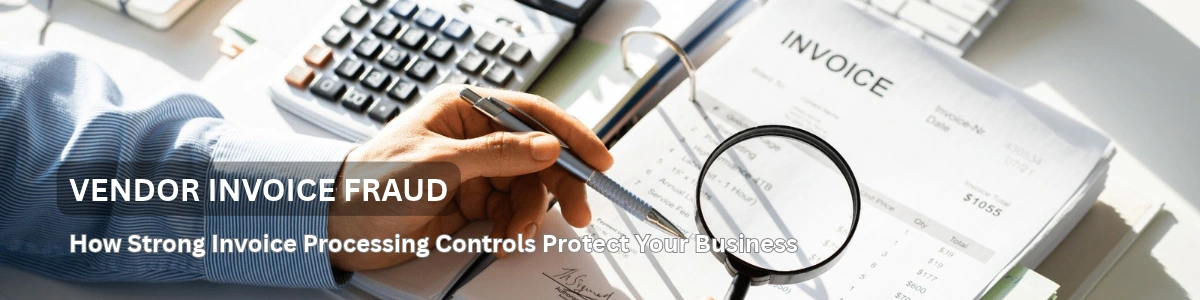
Invoice fraud occurs when criminals or dishonest parties manipulate invoices, impersonate vendors, or submit false payment requests to obtain money from businesses. Companies can reduce this risk through vendor verification, purchase order matching, duplicate invoice detection, independent payment approvals, and regular account reconciliations.
Key Facts at a Glance
- Invoice fraud includes fake invoices, vendor impersonation, and altered payment instructions.
- Business Email Compromise can divert legitimate supplier payments.
- Three-way matching in accounts payable helps identify discrepancies before payment.
- Vendor reconciliations can uncover duplicate and unauthorized transactions.
- Independent verification and banking controls strengthen payment security.
Quick Read
This article is intended for US business owners, CFOs, controllers, finance managers, and accounting professionals responsible for vendor payments. It examines how fraudulent invoices enter accounts payable workflows, the warning signs finance teams should recognize, and the controls businesses can implement to protect their funds. It also explains how accounting technology, banking safeguards, and professional accounting support can improve payment accuracy and operational oversight.
Introduction
Invoice fraud occurs when someone deliberately submits a false invoice, manipulates a legitimate billing document, or impersonates an authorized vendor to obtain an unauthorized payment. For businesses processing numerous supplier invoices every month, identifying these activities can be difficult without consistent verification procedures.
The risk is not limited to external criminals. Fraud can also involve dishonest employees, compromised vendor email accounts, or unauthorized changes to established supplier records. Even an invoice that appears legitimate can result in a financial loss if the payment request is not properly verified.
Effective invoice fraud prevention requires more than checking invoice amounts. Businesses need reliable vendor records, documented purchasing procedures, independent approvals, and regular reconciliations. Understanding how these controls work together can help finance teams identify suspicious transactions before money leaves the company’s bank account.
What Is Invoice Fraud and How Does It Affect US Businesses?
Invoice fraud is the deliberate use of false, manipulated, or unauthorized billing documents to obtain payments from a business. Fraudsters may create invoices for services that were never provided, imitate genuine suppliers, or modify the payment details on legitimate invoices.
Unlike an ordinary billing error, fraudulent invoicing involves deliberate deception. However, both can result in incorrect payments, making a consistent review process essential.
The financial and operational consequences can include:
Direct financial losses
Payments made to fraudulent accounts may be difficult to recover.
Cash flow disruption
Unauthorized payments reduce available working capital and can affect scheduled business expenses.
Accounting inaccuracies
Incorrect vendor payments create reconciliation problems and distort expense records.
Operational interruptions
Finance teams may spend considerable time investigating disputed transactions and correcting accounting entries.
Vendor relationship problems
Genuine suppliers may experience delayed payments when fraudulent activity creates uncertainty around outstanding invoices.
For growing businesses, these problems can become particularly difficult during month-end close, when accounting teams are already managing reconciliations, reporting deadlines, and outstanding payment obligations.
What Are the Common Types of Invoice Fraud?
Fraudulent billing can take several forms. Recognizing the methods used by fraudsters helps businesses identify weaknesses in their existing accounts payable procedures.
|
Type of fraud
|
How it works
|
|---|---|
|
Fake vendor invoices
|
Fraudsters submit invoices for products or services that were never ordered or received.
|
|
Vendor impersonation
|
Someone pretends to represent a genuine supplier and requests payment.
|
|
Invoice manipulation
|
Existing invoices are altered to change amounts, bank details, or payment instructions.
|
|
Business Email Compromise (BEC)
|
Criminals compromise or impersonate business email accounts to influence payment decisions.
|
|
Duplicate billing fraud
|
The same invoice is deliberately submitted more than once to obtain additional payment.
|
|
Internal invoice fraud
|
An employee manipulates vendor information, supporting documents, or approval procedures to authorize an improper payment.
|
Business Email Compromise and Email Thread Hijacking
Business Email Compromise (BEC) is particularly concerning because fraudulent requests can appear to come from trusted business contacts. Criminals may compromise a supplier’s email account, impersonate a company executive, or create an email address that closely resembles a genuine one.
In email thread hijacking, fraudsters gain access to an existing email conversation and use its context to introduce fraudulent payment instructions. Because the communication appears to be part of a legitimate discussion, employees may not immediately recognize the manipulation.
For example, a supplier may send an email requesting a change to its banking details shortly before an invoice becomes due. If the finance team updates its records without independently confirming the request, subsequent ACH or wire transfers may be diverted to an unauthorized account.
Businesses should therefore never treat an email alone as sufficient authorization for changing vendor banking information or releasing unusual payments.
You can also read – Top Signs Your U.S. Business Needs Accounts Payable Outsourcing
How Can Businesses Detect Invoice Fraud Before Making Payments?
Effective invoice fraud detection begins with a structured review of every payment request. Rather than relying solely on invoice appearance or email correspondence, accounts payable teams should verify transactions against independent business records.
Several procedures can strengthen this process.
Verify Vendor Identity and Payment Details
New vendors should be checked before being added to the accounting system. Businesses should confirm the supplier's identity, business details, contact information, and agreed payment arrangements. Any request to change bank account details should be independently verified using previously established contact information. Employees should not rely on the telephone number or email address included in the change request itself.
Introduce Duplicate Invoice Detection
Duplicate invoice detection helps identify invoices that may have already been entered or paid. Accounting teams should review vendor names, invoice numbers, amounts, dates, and purchase order references before approving payments. A duplicate does not always indicate fraud. Vendors sometimes resubmit invoices because they believe an earlier submission was not received. Nevertheless, duplicate entries should be investigated rather than automatically processed.
Perform Vendor Statement Reconciliation
Regular vendor statement reconciliation involves comparing supplier statements with the company's accounts payable ledger. This process can reveal duplicate payments, missing credit notes, unexplained outstanding balances, and invoices that do not appear in the company's records. Differences should be investigated and resolved before outstanding balances are finalized.
Examine Unusual Invoice Characteristics
Finance teams should pay attention to invoices and payment requests containing:
- Unexpected changes in payment instructions.
- Unfamiliar vendor email addresses or slight domain variations.
- Missing purchase order references.
- Repeated invoices with slightly different numbers.
- Unexpected urgency or pressure to release payments immediately.
- Attachments or links requesting changes to payment information.
What Internal Controls Help Prevent Invoice Fraud?
A reliable invoice fraud prevention framework combines purchasing controls, invoice verification, approval procedures, and payment monitoring. No single measure can eliminate every risk, but multiple layers of review make unauthorized payments more difficult.
Implement Three-Way Matching
Three-way matching in accounts payable is a control that compares three documents before a supplier invoice is approved:
- Purchase order: Confirms what the business authorized the vendor to supply.
- Receiving report: Confirms that the goods or services were received..
- Vendor invoice: Confirms the amount being billed for the transaction.
Establish Independent Payment Approvals
The employee entering an invoice should not have unrestricted authority to approve and release its payment. Separating these responsibilities reduces the possibility of unauthorized transactions going unnoticed. Businesses should establish approval limits based on transaction value and require additional authorization for unusual or high-value payments. Wire transfers and changes to vendor banking information should receive particular attention.
Maintain Accurate Vendor Records
Vendor master data should be accessible only to authorized employees. Changes to supplier addresses, contact details, and banking information should follow a documented approval and verification process. Periodic reviews of vendor records can also help identify inactive suppliers, duplicate vendor profiles, and unexpected changes.
Use Banking Controls to Protect Payments
Businesses should also discuss available fraud prevention services with their banks. Depending on the bank and account configuration, these may include:
- Positive Pay: Allows businesses to submit issued check details to their bank so that discrepancies can be identified before checks are paid.
- ACH Positive Pay: Allows businesses to review ACH debit transactions against authorized payment information, where supported.
- ACH blocks and filters: Help restrict unauthorized ACH debits or permit transactions only from approved sources.
- Dual payment authorization: Requires a second authorized person to review or approve designated transactions.
Example: A company receives two invoices from the same supplier with identical amounts but different invoice references. Instead of processing both, the accounts payable team checks the purchase order, receiving documentation, and vendor statement. The review establishes that one invoice was resubmitted, preventing an unnecessary second payment.
How Can Businesses Strengthen Their Accounts Payable Processes?
A well-designed vendor invoice processing workflow reduces the likelihood of errors and creates opportunities to identify suspicious transactions before payment.
Businesses should consider using a structured process that covers the complete invoice lifecycle.
|
Process stage
|
Recommended control
|
|---|---|
|
Invoice receipt
|
Accept invoices through designated and monitored channels.
|
|
Vendor verification
|
Confirm the supplier's identity and approved payment details.
|
|
Invoice entry
|
Check invoice numbers, amounts, dates, and supporting references.
|
|
Document matching
|
Compare invoices against purchase orders and receiving records.
|
|
Approval
|
Obtain authorization from designated personnel.
|
|
Payment processing
|
Verify payment instructions and release payments through controlled procedures.
|
|
Reconciliation
|
Compare vendor statements with accounts payable records.
|
|
Recordkeeping
|
Retain invoices, approvals, supporting documents, and payment records.
|
Use an Appropriate Vendor Invoice Processing System
A reliable vendor invoice processing system can help businesses organize invoice submissions, maintain transaction records, and establish consistent approval workflows.
Depending on the software and configuration, automation may support invoice data capture, duplicate identification, purchase order matching, approval routing, exception reporting, and payment tracking.
However, automation should complement—not replace—human verification. Software may flag unusual transactions, but finance personnel must investigate exceptions and confirm that payment requests are legitimate.
Consider Professional Accounts Payable Support
Businesses processing high invoice volumes may find it difficult to maintain consistent reviews with limited internal accounting resources. Accounts payable outsourcing services can provide additional operational support for invoice processing, vendor reconciliations, documentation, and payment workflow administration.
However, outsourcing does not transfer the business’s ultimate responsibility for authorizing payments and maintaining appropriate financial controls. Companies should retain oversight of vendor approvals, banking changes, payment authorization, and sensitive financial information.
You can also read – How to Select Top Accounts Payable Outsourcing Companies: A Checklist
How Can KMK Associates Help with Vendor Invoice Processing
KMK Associates supports businesses with structured accounting and accounts payable processes that improve transaction accuracy, documentation quality, and financial reporting consistency.
Our accounting professionals assist with invoice recording, vendor account maintenance, transaction reviews, reconciliations, and supporting documentation. These activities help businesses maintain organized accounts payable records and identify discrepancies that require further investigation.
Through technology-enabled accounting workflows, KMK helps clients manage recurring finance operations while maintaining clear documentation and defined review procedures. Our accounts payable outsourcing services can also support businesses that need additional accounting capacity without expanding their internal teams.
The objective is to help businesses maintain dependable financial records, improve workflow efficiency, and establish processes that support better oversight. Payment authorization and sensitive financial decisions remain subject to the client’s designated internal controls.
Need Help Strengthening Your Accounts Payable Controls?
Robust accounting support can help improve invoice accuracy and payment oversight.
Conclusion
Invoice fraud is not simply a payment processing problem. It can expose weaknesses in vendor management, purchasing procedures, internal approvals, and financial reporting. Businesses need to examine their entire accounts payable workflow rather than depend on a single verification measure.
Consistent vendor verification, duplicate invoice detection, three-way matching, independent payment approvals, appropriate banking safeguards, and regular reconciliations provide a stronger foundation for managing payment risks.
For business owners and finance leaders, the priority should be to establish controls that are practical, consistently followed, and appropriate for the organization’s transaction volumes. Reviewing existing procedures and addressing gaps can help protect working capital and maintain more reliable financial records.
FAQs about Invoice Fraud Detection and Prevention
Common warning signs include unexpected changes to vendor banking information, unfamiliar email addresses, duplicate invoices, missing purchase order references, unusual payment requests, and unexplained changes in invoice amounts. Any inconsistency should be independently verified before payment approval.
Small businesses should verify new vendors, independently confirm banking changes, maintain accurate supplier records, and separate invoice entry from payment approval. Regular bank and vendor reconciliations also help identify unusual transactions before they create larger financial problems.
Three-way matching compares purchase orders, receiving documentation, and supplier invoices before payment. It helps businesses identify differences in quantities, pricing, and authorized purchases, reducing the possibility of paying for goods or services that were not ordered or received.
Automation can improve invoice processing by identifying potential duplicates, routing transactions for approval, and flagging discrepancies. However, automated alerts require appropriate review. Businesses should combine software capabilities with independent vendor verification and documented payment authorization procedures.
A business may consider accounts payable outsourcing services when growing invoice volumes, limited accounting resources, or inconsistent reconciliation procedures make internal processing difficult. Professional support can improve workflow consistency while the business retains control over vendor relationships and payment authorization.
What Next?
Still have questions? That’s where KMK comes in.
KMK Associates helps businesses strengthen accounting workflows, maintain accurate vendor records, and improve accounts payable efficiency through structured accounting support. If your business needs assistance with invoice processing, reconciliations, or financial operations, connect with our team to discuss your requirements.