Table of Contents
ToggleLatest Update – October 2026
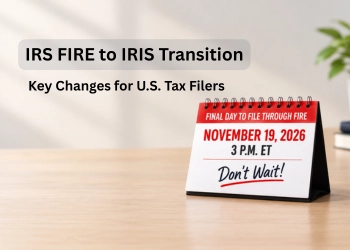
The IRS has announced that the Filing Information Returns Electronically (FIRE) system will stop accepting information returns on November 19, 2026, at 3 p.m. Eastern Time. Beginning January 1, 2027, IRIS will become the sole electronic filing intake system for information returns previously supported by FIRE. Businesses and tax professionals should complete their transition preparations before the 2027 filing season.

The IRS will stop accepting information returns through FIRE on November 19, 2026, at 3 p.m. ET. Beginning January 1, 2027, IRIS will replace FIRE for the information returns covered by the transition. Businesses and CPAs should obtain the required IRIS authorization, review their filing methods, and update data preparation and validation procedures before the 2027 filing season.
Key Facts at a Glance
- FIRE's final submission deadline is November 19, 2026, at 3 p.m. ET.
- IRIS becomes the replacement filing system for information returns previously accepted through FIRE on January 1, 2027.
- Direct IRIS filing requires the appropriate IRIS Transmitter Control Code (TCC).
- The Taxpayer Portal supports manual entry and CSV uploads, while A2A supports XML-based submissions.
Quick Read
This guide is for CPAs, controllers, tax directors, accounting firms, and businesses responsible for information return compliance. It explains the differences between FIRE and IRIS, identifies the important transition dates, and outlines practical steps for preparing for the change. It also discusses how businesses can review their 1099 reporting workflows and maintain appropriate controls during the transition.
Introduction
The retirement of FIRE is an important operational change for businesses and accounting firms that submit information returns electronically. The IRS is moving filers to the Information Returns Intake System (IRIS), which provides different submission methods and authorization requirements.
The transition affects organizations filing Forms 1099 and other information returns previously supported by FIRE. It also affects CPA firms and service providers that manage filings for multiple clients. Existing file preparation procedures, software arrangements, and submission processes may need to be reviewed before the next filing season.
The main concern is not simply learning a new filing portal. Organizations need to determine whether their current systems and procedures are compatible with IRIS and whether the appropriate authorization is in place. Preparing early gives filing teams time to address data issues, test their processes, and assign responsibilities before deadlines approach.
Understanding the Retirement of IRS FIRE
The Filing Information Returns Electronically (FIRE) system has served as an electronic submission platform for information returns, including various Forms 1099. Filers typically prepared files according to the applicable IRS specifications and transmitted them through the system.
The IRS is replacing FIRE with IRIS. Although IRIS has been available since 2023 as part of a phased transition, the retirement of FIRE completes the move for the information returns previously supported by the legacy platform.
Why is the IRS replacing FIRE?
IRIS provides two filing channels: the IRIS Taxpayer Portal and Application-to-Application (A2A).
The Taxpayer Portal is a free, web-based service that allows users to enter information manually or upload CSV files. A2A supports electronic submissions through compatible software using XML files, making it suitable for organizations that need to handle larger filing volumes.
The transition also requires attention to authorization. Businesses and service providers planning to file directly through IRIS should review the IRIS Application for TCC requirements. Existing FIRE authorization should not be assumed to provide the authorization needed for IRIS.
Another important consideration is file compatibility. Publication 1220, which contains specifications for electronic filing of several information return forms through FIRE, is scheduled to become obsolete when FIRE retires. The relevant technical information will be provided through the applicable IRIS schema package and IRS publications.
Organizations should therefore review their filing software, data formats, authorization arrangements, and internal procedures well before the transition.
Core Differences Between Legacy Filing and IRIS
The move from FIRE to IRIS changes how information returns are submitted and processed. However, the underlying reporting obligations remain in place.
FIRE vs. IRIS: A Simple Comparison
|
What to Compare
|
FIRE (Legacy System)
|
IRIS (Replacement System)
|
|---|---|---|
|
Filing method
|
Submit prepared information return files
|
Enter data online, upload CSV files through the Taxpayer Portal, or submit XML through A2A
|
|
File format
|
Files prepared according to applicable FIRE specifications
|
CSV for Taxpayer Portal uploads or XML for A2A submissions
|
|
Access and authorization
|
Existing FIRE account and applicable TCC
|
IRIS access and the appropriate IRIS TCC
|
|
Data checking
|
Review submission acknowledgments and file-level results
|
Review IRIS validation results and error messages
|
|
Corrections
|
Use the applicable FIRE correction process while the system remains available
|
Submit applicable corrections through IRIS
|
What stays the same? Businesses must continue to comply with the applicable reporting rules, form requirements, and filing deadlines. Moving to IRIS does not remove the need to prepare accurate returns or furnish recipient statements when required.
What should filers do? Confirm their IRIS authorization, determine the appropriate submission method, and check whether their software supports the required IRIS formats.
The Taxpayer Portal permits up to 100 returns per upload. Organizations handling higher volumes should evaluate whether A2A or a compatible filing provider is more appropriate for their needs.
FIRE to IRIS Transition: Important Dates and Deadlines
The transition has several important milestones in November 2026, followed by the beginning of the IRIS-only filing period for information returns previously accepted through FIRE.
Key Transition Dates
|
Date
|
What Happens
|
What Filers Should Do
|
|---|---|---|
|
November 1, 2026
|
Last day to submit test information returns through the FIRE Trading Partner Test System
|
Complete any remaining FIRE test submissions
|
|
November 9, 2026
|
Last day to make changes to existing Information Returns applications for TCCs
|
Complete any necessary updates to existing applications
|
|
November 19, 2026, at 3 p.m. ET
|
Final deadline for submitting information returns through FIRE
|
Complete submissions that must be filed through FIRE before the cutoff
|
|
January 1, 2027
|
IRIS becomes the replacement electronic filing intake system for information returns previously supported by FIRE, including applicable current-year, prior-year, and correction filings
|
Use IRIS or a compatible filing provider for the affected information returns
|
These are system transition dates, not extensions of individual tax filing deadlines. The November deadlines determine when particular FIRE functions become unavailable. The January date marks the start of the replacement filing arrangement.
What happens after the FIRE shutdown?
Beginning January 1, 2027, filers must use IRIS for the information returns covered by the transition. This includes applicable tax year 2026 returns submitted during the 2027 filing season, as well as eligible prior-year returns and corrections.
Businesses must also continue to observe the filing deadlines applicable to individual forms. For example, the federal deadline for filing Form 1099-NEC for tax year 2026 is generally February 1, 2027, because January 31 falls on a Sunday. The electronic filing deadline for Form 1099-MISC is generally March 31, 2027.
Organizations should keep these form-specific deadlines separate from the FIRE transition dates when updating their compliance calendars.
Essential Steps to Prepare for IRIS Filing
A smooth transition starts with confirming how information returns will be submitted after FIRE retires. Businesses filing directly should review their IRIS application requirements, while those using third-party software or filing services should confirm that their chosen solution supports the appropriate IRIS channel.
Confirm IRIS authorization
Businesses and service providers planning to file directly should complete the applicable IRIS Application for TCC. The TCC identifies the business or transmitter for the relevant filing method. Organizations should identify the person responsible for the application, confirm that the necessary authorization is in place, and establish who will manage submissions and corrections. Firms filing for multiple clients should also review how their transmitter arrangements will work under IRIS.
Select the appropriate filing method
The IRIS Taxpayer Portal supports manual entry and CSV uploads of up to 100 returns per upload. It may suit businesses with smaller filing volumes or relatively straightforward requirements. The A2A channel supports XML-based submissions through compatible software. Businesses that process larger volumes should assess their software capabilities, integration requirements, and internal resources before deciding how to file.
Review data quality and validation procedures
The system transition is an opportunity to review the information used to prepare returns. Check taxpayer identification numbers, recipient details, payment amounts, and other required fields before submission. Internal procedures should cover data collection, review, validation, submission acknowledgments, correction handling, and record retention. Clear responsibility for each stage helps teams resolve issues without unnecessary delays. Organizations should also review the applicable IRIS technical documentation instead of relying exclusively on their old FIRE file specifications.
Impact on 1099-NEC and 1099-MISC Compliance Workflows
Forms 1099-NEC and 1099-MISC are important components of year-end information reporting for many businesses. The transition changes the filing platform, but it does not remove the obligation to report payments accurately or meet applicable deadlines.
Form 1099-NEC
Form 1099-NEC is generally used to report nonemployee compensation when the applicable reporting requirements are met. Businesses need accurate records of reportable payments, recipient details, and taxpayer identification information. For the 2027 filing season, organizations should confirm that their accounting systems and preparation processes can produce data compatible with their selected IRIS filing method. They should also allow sufficient time for review, corrections, and submission before the applicable deadline.
Form 1099-MISC
Form 1099-MISC covers certain reportable payments that fall within its categories. Businesses should review payment classifications, recipient information, and required amounts to ensure that the information is complete and accurate. The transition provides a useful opportunity to review existing reporting controls. Missing recipient information, inconsistent classifications, and unresolved discrepancies can delay filing regardless of which electronic system is used.
Why workflow readiness matters
Information return data often comes from several sources, including accounting software, accounts payable records, payroll systems, and client-provided documents. If these records are incomplete or inconsistent, errors may surface late in the preparation process.
A well-managed workflow includes early data collection, documented review procedures, clear approval responsibilities, and a process for resolving rejected or inaccurate submissions. These controls remain important after the transition to IRIS.
Operational Advantages of Outsourcing Tax Preparation During System Changes
For accounting firms and businesses managing substantial information return workloads, outsourcing tax preparation may provide additional operational support. Whether it is appropriate depends on filing volume, internal capacity, software capabilities, and the level of control an organization wants to retain.
An external tax preparation provider may assist with organizing source data, checking information return details, preparing filing-ready records, and supporting review procedures. This support can be useful when internal teams are simultaneously managing year-end closing, tax return preparation, and other compliance responsibilities.
However, outsourcing does not remove the need for appropriate oversight. Before engaging a provider, organizations should establish responsibility for data accuracy, filing authorization, submission approval, correction handling, and confirmation of successful filing.
Businesses should also distinguish between preparation support and electronic transmission. A provider’s ability to prepare returns does not automatically mean it can transmit them through IRIS. Its capabilities and the division of responsibilities should be confirmed before the engagement begins
How KMK Associates Helps
KMK Associates supports accounting and tax preparation workflows that require organized financial data, consistent review procedures, and dependable preparation processes.
During the FIRE-to-IRIS transition, businesses and accounting firms may benefit from reviewing how information return data is collected, checked, and prepared before submission. This can include organizing source records, identifying discrepancies, supporting information return preparation, and maintaining clear review procedures.
The appropriate scope of support depends on each organization’s requirements. Businesses should clarify whether they need preparation assistance, software support, electronic transmission, or correction handling, and confirm which responsibilities remain with their internal team.
Need Help Managing Your Information Return Transition?
Professional support helps improve reporting accuracy and scale with confidence.
Conclusion
The retirement of FIRE is an important change for businesses, CPA firms, and other organizations that submit information returns electronically. The final FIRE submission deadline is November 19, 2026, at 3 p.m. ET, and IRIS becomes the replacement system for information returns previously supported by FIRE beginning January 1, 2027.
Organizations should confirm their IRIS authorization, choose the appropriate filing method, review data compatibility, and update their internal controls before the transition. They should also distinguish system transition dates from the filing deadlines for individual forms.
Addressing these requirements early can help businesses and tax professionals maintain a more orderly preparation and submission process during the 2027 filing season.
FAQs
After the legacy system decommissions, electronic filings submitted through old flat-file methods will be rejected completely. Tax filers must use the new platform or an authorized service provider to submit returns, as unsubmitted returns incur statutory failure-to-file penalties.
No, existing transmission codes cannot be converted or transferred. Organizations must complete a new online application, undergo identity authentication via ID.me, and wait up to 45 business days for IRS approval.
The new system validates data in real time upon transmission. Because Form 1099-NEC has a strict statutory deadline with no automatic extensions, files containing unvalidated TINs or formatting errors must be corrected immediately to prevent late-filing fines.
The electronic filing mandate applies when an entity submits 10 or more aggregate returns across all form types. This means virtually all businesses filing Form 1099-MISC must e-file through modern portals rather than mailing paper forms.
Outsourcing removes the need to build custom XML transmission tools, manage API connections, or navigate complex credential applications internally. External accounting partners handle data validation, formatting, and submission, ensuring error-free compliance.
What Next?
The transition from FIRE to IRIS requires more than a change in filing platforms. Accurate information return preparation, reliable data validation, and well-organized workflows are essential to meeting reporting requirements and avoiding last-minute complications. KMK Associates supports accounting and tax preparation processes that help businesses and CPA firms manage their information return workloads with greater consistency and control. Connect with KMK Associates to discuss your information return preparation requirements and explore how our accounting support services can help your team prepare for the 2027 filing season.