
Table of Contents
ToggleLatest Update – September 2026
The upcoming 2027 partnership tax season will generally involve 2026 tax-year returns for calendar-year partnerships. The IRS has published a draft 2026 Form 1065 along with draft Schedule K-1 and other related schedules. However, draft forms should not be filed, and businesses should use the final forms and instructions once they are released. This preparation period gives partnerships and accounting firms an opportunity to close their books, reconcile accounts, review partner activity, organize supporting records, and identify transactions that may require additional tax review before filing season becomes busy.
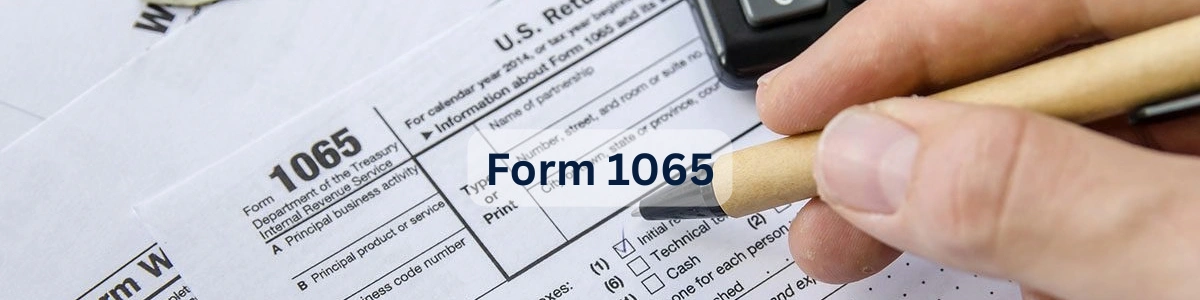
Form 1065 is the U.S. partnership information return used to report a partnership’s income, gains, losses, deductions, credits, and other required information to the IRS. For the 2027 filing season, calendar-year partnerships will generally be preparing 2026 returns. Early preparation should focus on reconciling the books, reviewing partner activity, organizing supporting documentation, and ensuring that Schedule K-1 information agrees with the partnership’s records.
Key Facts at a Glance
- Form 1065 reports partnership-level financial and tax information.
- Schedule K-1 reports each partner’s share of relevant items.
- Calendar-year partnerships generally file by March 15, subject to weekend and holiday rules.
- Form 7004 can be used to request an automatic six-month extension.
- Accurate books and partner information are essential to reliable tax preparation.
Quick Read
Partnership tax preparation should begin well before the filing deadline. For calendar-year partnerships, the 2027 filing season will generally involve activity from the 2026 tax year.
The process goes beyond completing the 1065 tax form. The partnership’s accounting records, partner information, supporting documentation, applicable schedules, and Schedule K-1s all need to work together.
The best starting point is therefore the accounting close. Bank and credit-card accounts should be reconciled, revenue and expenses reviewed, partner contributions and distributions confirmed, ownership changes identified, and significant transactions documented. Reviewing these matters early gives the tax preparer more time to resolve questions and reduces unnecessary back-and-forth during the busiest part of tax season.
Introduction
Preparing a partnership tax return is easier when the accounting work is completed before tax preparation begins. For the upcoming 2027 filing season, calendar-year partnerships will generally be preparing returns for the 2026 tax year.
Form 1065, U.S. Return of Partnership Income, is an information return used by partnerships to report income, gains, losses, deductions, credits, and other required information to the IRS. Partnerships generally pass applicable income and other tax items through to their partners rather than paying federal income tax on those amounts at the partnership level.
That structure makes accurate partner-level reporting particularly important. Information from the partnership return flows into Schedule K-1, which partners use when preparing their own tax or information returns.
For that reason, tax preparation should not be treated as a form-filling exercise. The underlying books need to support the return, significant transactions need to be understood, and partner information needs to be accurate before the final return is prepared.
What Is Form 1065 and Who Must File It?
The form 1065 IRS return, formally called the U.S. Return of Partnership Income, is used by partnerships to report their financial and tax information to the IRS. The return can include information about partnership income, deductions, gains, losses, credits, assets, liabilities, partners, and other items relevant to the partnership’s tax reporting. The schedules required can vary depending on the partnership’s structure, activities, transactions, and other circumstances.
For a calendar-year partnership, Form 1065 is generally due on the 15th day of the third month following the end of the partnership’s tax year. Form 7004 can generally be used to request an automatic extension of time to file. An extension, however, should not be viewed as a substitute for preparation. The partnership still needs to organize its records, address outstanding accounting issues, prepare applicable schedules, and provide required partner information. Starting early gives the tax team an opportunity to identify problems while there is still time to resolve them.
What Information Is Included in Form 1065?
A partnership return is made up of the main Form 1065 and, depending on the partnership’s circumstances, various schedules and supporting forms. Understanding the major components helps businesses prepare the right information instead of simply sending a general ledger to the tax preparer.
|
Schedule
|
What it covers
|
What should be prepared or reviewed
|
|---|---|---|
|
Schedule B-1 — Information on Partners Owning 50% or More of the Partnership
|
Provides information about certain entities, individuals, and estates that directly or indirectly own 50% or more of the partnership's profit, loss, or capital.
|
Review partner ownership information and identify any partners or entities that meet the applicable 50% ownership threshold.
|
|
Schedule C — Additional Information for Schedule M-3 Filers
|
Provides additional information for certain partnerships that file Schedule M-3.
|
Determine whether Schedule M-3 applies and, if so, gather the information needed to complete the additional questions on Schedule C.
|
|
Schedule D — Capital Gains and Losses
|
Reports certain capital gains and losses, including applicable transactions reported through Form 8949, installment sales, like-kind exchanges, and certain gains and losses from other entities.
|
Gather documentation for applicable asset sales, investments, capital transactions, and other transactions that may need to be reported on Schedule D.
|
|
Schedule K-1 — Partner's Share of Income, Deductions, Credits, etc.
|
Reports each partner's share of the partnership's income, deductions, credits, and other applicable items.
|
Verify partner information, ownership, allocations, contributions, distributions, liabilities, and other partner-specific information.
|
|
Schedules K-2 and K-3 — International Information
|
Report items of international tax relevance arising from the operation of a partnership.
|
Determine whether the partnership meets the applicable filing requirements or exceptions and gather the relevant international information.
|
|
Schedule M-3 — Net Income (Loss) Reconciliation for Certain Partnerships
|
Provides information about financial statements and reconciles financial statement income or loss with amounts reported for tax purposes for certain partnerships.
|
Determine whether Schedule M-3 is required and gather the financial and tax information needed for the applicable reconciliation.
|
The IRS currently provides Form 1065 and related schedules including Schedule K-1, K-2, K-3 and Schedule D. Not every partnership is required to complete every schedule. The applicable requirements depend on the partnership’s circumstances.
What Should Partnerships Prepare Before Tax Season?
A reliable partnership tax return starts with reliable accounting records. Before working through the form 1065 instructions, the partnership should make sure its books are complete, reconciled, and capable of supporting the amounts that will ultimately be reported.
Bank and credit-card accounts should be reconciled through year-end, with unexplained transactions investigated rather than simply carried forward. Accounts receivable, accounts payable, fixed assets, depreciation records, revenue classifications, and major expense categories should also be reviewed.
Partner activity deserves particular attention. Contributions, distributions, guaranteed payments, changes in ownership percentages, and the admission or departure of partners can affect partner-level reporting. Relevant agreements and transaction documentation should be available before the tax preparer begins finalizing the return.
The same applies to partnership loans and liabilities. Significant borrowing, repayments, changes in debt, or other liability movements should be reviewed and supported by appropriate records.
Significant asset sales, investments, or unusual income and expense transactions should also be identified early. A transaction that appears routine from a bookkeeping perspective may require additional tax analysis. Finding it during the year-end close gives the tax team more time to obtain documentation and determine the appropriate treatment.
Finally, the prior-year return should be reviewed alongside the current-year books. This can help identify recurring items, major changes, prior-year schedules, and areas where the current year’s activity differs materially from the previous year.
The objective is not simply to have a completed general ledger. The goal is to have accounting records that provide a reliable foundation for the tax return and the partner-level reporting that follows.
How Does Schedule K-1 Fit into Form 1065 Preparation?
The form 1065 Schedule K-1 reports each partner’s applicable share of partnership income, deductions, credits, and other required information. Because partners use K-1 information for their own tax or information returns, K-1 preparation should be treated as an integral part of the partnership tax process rather than as an administrative task added at the end.
The partnership should review K-1 information against its books, ownership records, allocation calculations, and completed return. Particular attention should be given to ownership changes, contributions, distributions, guaranteed payments, liabilities, separately reported items, and capital-account information. A problem in the underlying partnership records can eventually become a problem in partner-level reporting. That is why K-1 preparation and review should take place as part of the broader return workflow.
Partnerships should also determine whether Schedules K-2 and K-3 apply to them. These schedules relate to certain international tax information, but they are not automatically required for every partnership. The IRS provides specific filing requirements and exceptions, including a domestic filing exception subject to applicable criteria. Because the final 2026 instructions may contain updated requirements, partnerships should review the final IRS guidance before completing their 2026 return.
What Form 1065 Mistakes Should Businesses Address Before Filing?
Many partnership tax-return problems originate in the accounting records rather than in the tax form itself. Incomplete reconciliations can leave transactions unidentified or incorrectly classified. Missing partner information can make K-1 preparation more difficult, while unrecorded contributions or distributions can create differences between accounting records, capital information, and tax reporting.
Waiting too long to investigate unusual transactions can create another problem. If an ownership change, significant distribution, asset sale, investment, or debt transaction is discovered only when the return is nearly complete, the preparer may need to pause the engagement and request additional documentation. K-1 inconsistencies deserve similar attention. Partner-level information should agree with the partnership return and the supporting records. A structured review before filing can identify discrepancies while there is still time to correct them.
A pre-tax-season review is therefore more than an administrative exercise. It gives the tax team an opportunity to identify missing information and unusual transactions before they become deadline-driven problems.
How Can Businesses Make Partnership Tax Preparation More Efficient?
A practical form 1065 workflow should begin with the books and move systematically toward preparation and review.
Close the books
First, close the books. Complete reconciliations and resolve outstanding accounting issues before the tax preparer begins final preparation.
Review partner activity
Next, review partner activity. Confirm ownership, contributions, distributions, guaranteed payments, liabilities, and other significant changes during the year.
Organize supporting documents
Then, organize supporting documents. Keep records for assets, loans, investments, ownership changes, major transactions, and other tax-sensitive items together with the relevant workpapers.
Review the prior-year return
Review the prior-year return to identify recurring items and significant changes that require attention.
Prepare the return and applicable schedules
Prepare the return and applicable schedules using the final IRS forms and instructions for the relevant tax year. The IRS has published draft 2026 Form 1065 and related schedules, but these draft materials should not be treated as final filing guidance.
Review the completed return and K-1s
Finally, review the completed return and K-1s against the accounting records and partner information before filing.
For accounting firms managing multiple partnership engagements, standardized checklists, documented workpapers, and defined preparation and review responsibilities can make this workflow easier to manage during peak tax season.
How KMK Associates Helps
Partnership tax preparation requires coordination between accounting records, supporting documentation, tax workpapers, partner information, and review procedures. For businesses and accounting firms handling multiple partnership engagements, maintaining this workflow during tax season can place considerable pressure on internal teams. KMK Associates can support businesses and accounting firms through outsourcing tax preparation workflows that support Form 1065 engagements. Depending on the engagement, this can include bookkeeping review, account reconciliations, supporting documentation, partner-related accounting records, tax workpapers, and Schedule K-1 preparation support.
For accounting firms, Partnership Tax Returns Outsourcing can provide additional preparation capacity during periods of high workload. A structured arrangement can define documentation requirements, preparation responsibilities, review procedures, communication, and final filing responsibilities. The focus remains on organized records, consistent processes, clear workpapers, and timely communication. With these elements in place, accounting teams can spend less time chasing missing information and more time reviewing the work and addressing matters that require professional attention.
Preparing for partnership tax season?
Get your records ready before tax season peaks.
Conclusion
Preparing for the 2027 partnership tax season should begin well before the filing deadline. For calendar-year partnerships, that means using the months ahead to complete 2026 accounting records, reconcile accounts, review partner activity, organize supporting documentation, and identify transactions that may require additional tax attention. Form 1065 is only one part of the process. Accurate Schedule K reporting, Schedule K-1 preparation, applicable supporting schedules, complete documentation, and a thorough review are equally important.
The best preparation strategy is to start with the books, identify potential issues early, and use the final IRS guidance for the applicable tax year. The IRS has already published draft 2026 Form 1065 materials, but partnerships should confirm the final forms and instructions before completing their filing procedures. Starting early gives businesses and accounting firms more time to resolve questions, gather missing documentation, and approach tax season with a more organized and manageable workflow.
FAQs about Form 1065
Form 1065 is used by partnerships to report income, gains, losses, deductions, credits, and other required information to the IRS. Partnership income generally passes through to the partners, who report their respective shares on their own tax or information returns.
Preparation should begin well before the filing deadline. Partnerships should close their books, reconcile accounts, review partner activity, gather supporting documentation, and identify unusual transactions before the main tax-preparation workload begins.
A K-1 tax form reports a partner's applicable share of partnership income, deductions, credits, and other required information. Partners generally use this information when preparing their own tax or information returns.
Form 1065 is generally due on the 15th day of the third month following the end of the partnership's tax year. Form 7004 can generally be used to request an extension of time to file.
No. K-2 and K-3 requirements depend on the partnership's circumstances and the applicable IRS filing rules and exceptions. Partnerships should review the instructions for the relevant tax year to determine whether these schedules are required.
Yes. Outsourcing tax preparation can provide businesses and accounting firms with additional preparation capacity. A well-defined arrangement should establish responsibilities for documentation, preparation, review, communication, and final filing.
What Next?
Still have questions? That’s where KMK comes in. KMK Associates can support businesses and accounting firms with partnership tax preparation, reconciliations, supporting documentation, tax workpapers, and K-1 preparation. Talk to an advisor today!